The Decision Already Happened Before the Plug-In
Illustration
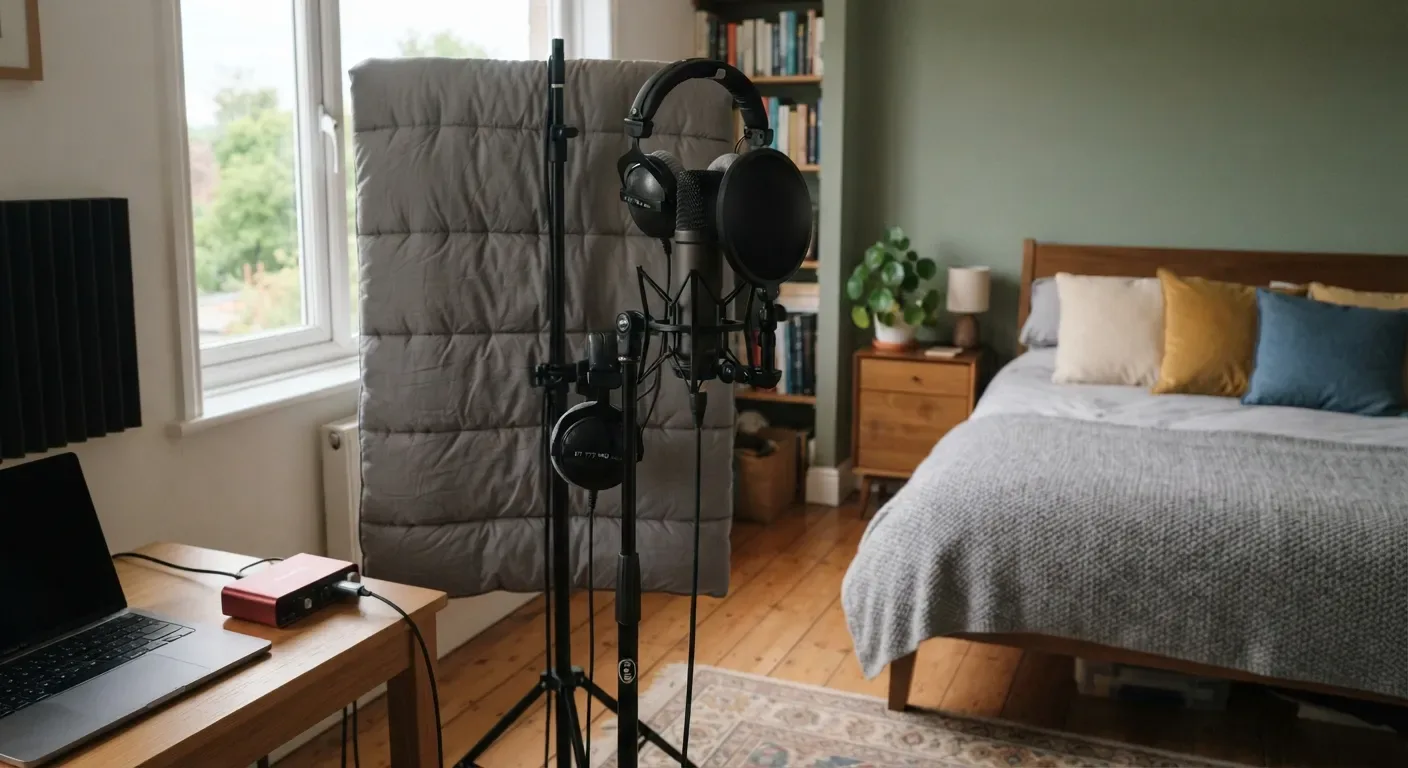
The best fader move I made last week happened before I opened a session at all — I walked a vocalist eight centimetres back from the capsule, checked the angle twice, and left the compressor plugin sitting, unopened, in the browser for another twenty minutes.
Universal Audio put the same order of operations in writing this week, in a blog post about recording vocals through their Apollo line: before compression, before EQ, before reverb, the decisions that actually hold a vocal together happen at the microphone — distance, angle, the room behind the singer's shoulder, the height of the stand relative to the mouth. I have not put a card in their newest Apollo interface, so I will not tell you what its converters do to a voice, or whether the preamps are worth the price on the sheet. But the order of operations they are describing is exactly the one I use with whatever interface happens to be plugged into the wall that day, because it has nothing to do with the box and everything to do with the habit.
A plugin can tighten a performance after the fact, and a good compressor return can save an afternoon. It cannot manufacture the eight centimetres, or talk a singer out of leaning into the pop filter on the loud word, or notice that the room hums a low F sharp through the window on the third take and not the first because a truck idled outside. Those are decisions, not settings on a channel strip, and every one of them gets made once, standing up, before the transport is even rolling.
Engineers newer to a session tend to treat the plugin chain as the craft and the mic stand as furniture you move out of the way. It runs the other way around. I can undo a compressor with one click and try again. I cannot undo a vocalist who spent forty minutes six inches too close to a capsule, because by then the tone that is technically wrong has also become the tone the singer associates with the take they were proudest of, and asking them to move six inches is asking them to stop trusting you.
So the plugin chain waits in the browser, closed, for as long as it takes to get the singer standing in the right relationship to a piece of foam and a stand — which is, on a good day, the whole first twenty minutes of the session, and none of it shows up anywhere on the session file afterward.
On the wire this week
- How to Record Vocals with UAD Plug-Ins and Apollo Interfaces Universal Audio Blog
I grew up at the bottom of the world, on the New Zealand coast, close enough to the sea that the salt got into everything, the speakers included. The radio dropped out every time the weather turned, so I learned early that sound is something you can lose. Reckon that's why I've spent my whole life chasing it. I chased it across the Pacific to Los Angeles and never quite went home: a dozen years of other people's sessions, first as the kid making coffee in a Burbank studio, now from a small room in Echo Park. I'm a producer and an engineer, but mostly I'm a bloke who can't sit still when a good record comes on. Give me a guitar with a bit of hair on it, a synth that drifts out of tune as the room warms up, a low end you feel in your chest. I want sound you could take a bite of: big, wide, a room breathing around the band. Long dinners, loud speakers, nights that don't know when to quit. Life's too bloody short for bad sound. One rule, and I don't bend it: if I haven't put a signal through it, I'm not writing about it.